


Workers at Liverpool‘s School of Tropical Medicine (LSTM) say they are being “kept in the dark” over the institution’s planned cuts of around £24m.
LSTM was the first medical school globally to be set up specifically for the study of tropical diseases and remains one of the city’s most internationally respected institutions. As such, it is in the front line of Britain’s defences against outbreaks of tropical diseases – a risk that is growing because of global warming. Yet its management is implementing cuts of around £8m in this financial year and similar cuts in each of the next two years. And workers have received “very little” explanation of why the cuts are being made, what will be cut and what the impact on the city and the workforce will be
LSTM has already run a voluntary severance scheme and unions believe compulsory redundancies are now a serious threat. Shamefully, LSTM does not formally recognise unions, though union members working at the school are pushing for recognition. But they have not been given any detail on LSTM’s financial position or how it is planning to make the ‘savings’ – or even which teams and programmes are facing the axe.
Questions to answer
Staff say that the organisation has serious questions to answer and is failing to do so. At the top of this list are:
1. What is behind a funding gap of this size, and when did management and the board first know about it?
2. Which teams, research programmes and posts are being targeted, and how many jobs are at risk?
3. Who is making these decisions, and why aren’t staff and their unions being given the full picture? Is it the same people deciding on the cuts who caused the initial problem?
4. What will the cuts mean for LSTM’s work on malaria, antimicrobial resistance, emerging infections, and vaccines, diagnostics and treatments, and for the funding and international partnerships that come with that work?
5. What does this mean for Liverpool’s life-sciences economy and its role in pandemic preparedness? LSTM is a founder member of the Liverpool Pandemic Institute and was part of the Covid-19 response, including the AGILE clinical trial platform.
A threat to the city
LSTM has been part of Liverpool’s academic and cultural fabrice since 1898. It employs a highly-skilled workforce wth expertise that will be both difficult and expensive to rebuild if it is lost. Cuts and closures at the school will damage the city’s scientific reputation and, even more importantly, the UK’s ability to respond to potentially catastrophic future health emergencies.
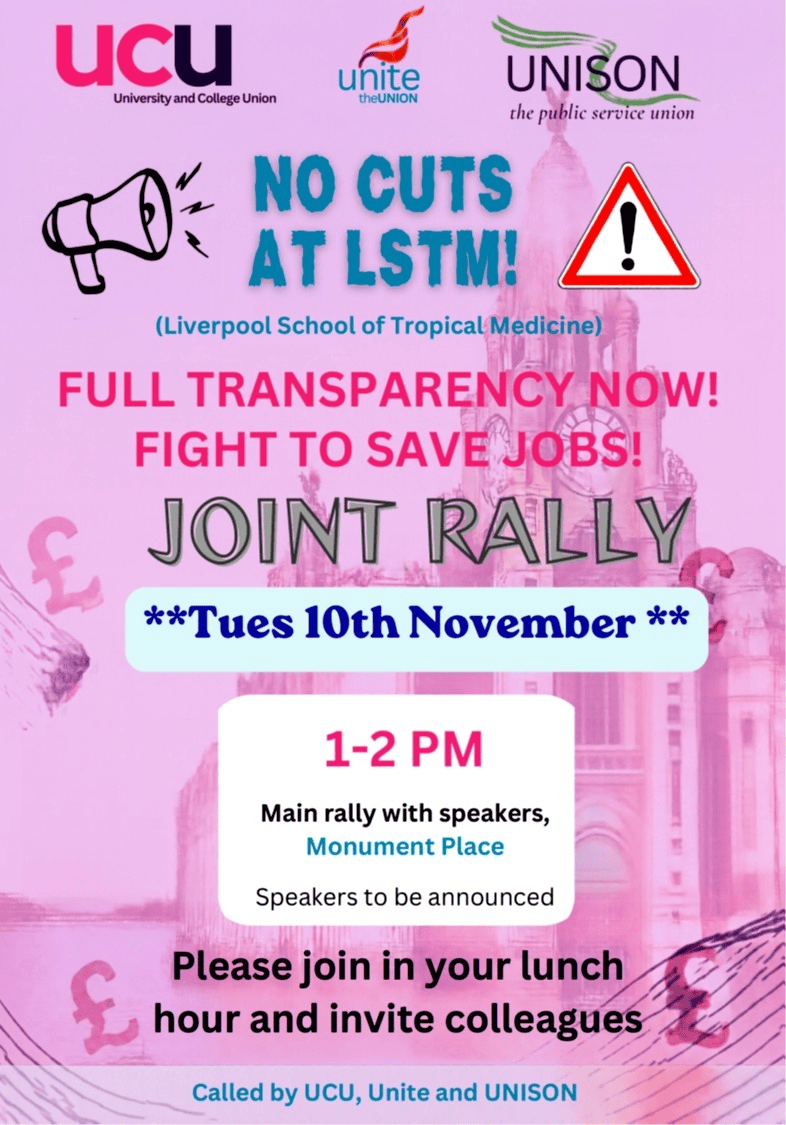
As such, the workers’ campaign to avert the cuts is attracting growing support, with both local MPs and the region’s ‘metro mayor’ on board. The campaign is holding a rally on 10 November from 1pm to raise awareness and combat the cuts, at Monument Place, Liverpool, with speakers to be announced.
Cover image: LSTM social media.
Skwawkbox needs your help. If you can do so without hardship, here’s how:
To make a regular donation via GoCardless, click here.
To make a regular or one-off donation via PayPal, click here.
Or to make a regular or one-off donation by simple card payment, use the form below:
Make a one-time donation
Make a monthly donation
Make a yearly donation
Choose an amount
Or enter a custom amount
Your support is hugely appreciated.
Your support is hugely appreciated.
Your support is hugely appreciated.